
Uncategorized














spiral
Solarbluseth — An Original Story
Spiral
Follow the road. Face the darkness. Find your way home.
Chapter One
Sent From the Emerald City
Before the boy ever walked a farm road or heard a rooster crow, he floated. A tiny baby in a wicker basket, wrapped in soft light, carried by a river that wound through a land he would not remember — not yet.
The Emerald City glowed behind him. Something had gone wrong there. Something had sent him away. The river carried him toward a swirling vortex, and on the other side — the amber glow of a city called Chicago, flickering with lightning.
The human world received him without fanfare. A farm. A family. A new life.
Chapter Two
The Farm Years
He grew up the way farm boys do — slowly, honestly, with dirt under his fingernails and stars overhead that felt close enough to touch. He didn’t know where he came from. Nobody did.
He learned to walk in the meadow, to ride a bike down a sunflower-lined road, to stare in fascination at a glowing computer screen. He read in haylofts with a flashlight. He studied until the lamp burned low. Whatever was in him — whatever the Emerald City had put there — was becoming something.
Chapter Three
The Key in the Chicken Coop
Every great story starts somewhere unexpected. This one started in a chicken coop.
He was thirteen. Just doing his chores — collecting eggs, talking to his favorite hen the way you do when you think nobody’s listening — when the hay shifted and something caught the lantern light. Gold. Ornate. Alive with a green glow that had no business being there.
An emerald the size of his fist, set into the bow of an old key, hanging from a chain. It pulsed like a heartbeat. The hen tilted her head at him. He picked it up.
Nothing would ever be the same.
🗝️
“Some doors aren’t built to be found.
They wait until you’re ready.”
Chapter Four
The Magic Tree
The key led him into the woods. Deeper than he’d ever gone — past the familiar paths, past where the light still reached comfortably. The chicken followed. She always followed.
And then he saw it.
An ancient tree, massive and impossible, radiating soft green light from deep within its bark. Runes carved in circles around a lock set perfectly at eye level — a keyhole that could only belong to one thing.
He held up the key. It glowed brighter. The forest went quiet. He turned it.
Chapter Five
The Yellow Brick Road
The tree opened like a door. Beyond it — the road. Gold and gleaming, winding through a world that breathed green light and smelled of roses.
He wasn’t alone for long. A girl with long blonde hair and a blue and yellow dress appeared — Alice, she said, though she didn’t seem entirely sure that was her real name. Her black cat came with her, trotting along the bricks without invitation, as cats do.
The three of them walked. The Emerald City shimmered in the distance, impossibly beautiful. And between them and it — a black silhouette under red lightning. A witch. Waiting.
Behind them, a tornado churned. Ahead, a reckoning. The road was the only choice.
The story continues…
Stream Spiral — the single from the upcoming Solarbluseth album Sonata
Uncategorized

sonotica
A Radio Dramedy by SolarBluSeth
Sonotica
the pornography of sound
Now Playing
The signal goes everywhere. And whoever catches it… catches it.
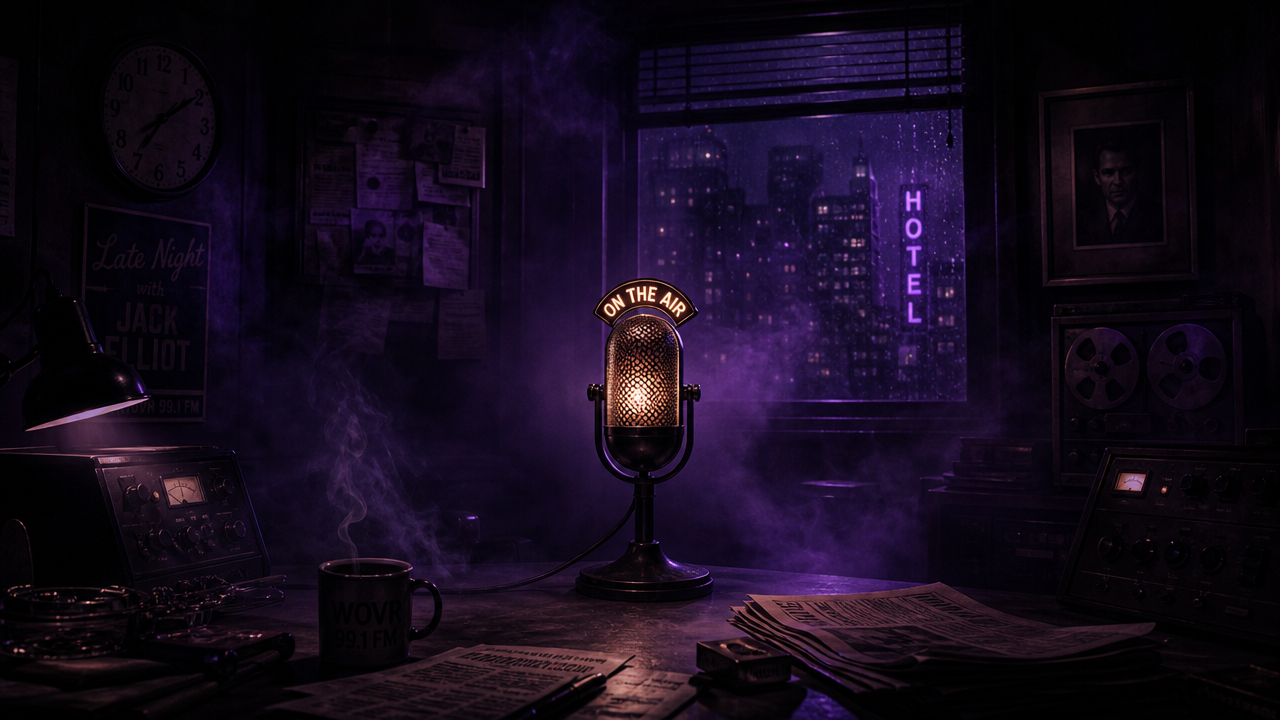
Sonotica is an AI-generated audio drama built around the seduction of the human voice. A late night radio host. Two callers. A triangle no one admits to until the signal goes dark.
Built around phonaesthetics — the idea that sound itself can seduce — this 8-minute radio dramedy asks what happens when a voice becomes the content. No visuals. No context. Just frequency and whoever is listening.
Written, directed, and produced entirely with AI voice synthesis by SolarBluSeth.
Cast
The Announcer
Seth
Deep. Resonant. Selective. Voice cloned via ElevenLabs. He never chooses sides.
Lover A
Lily
Warm. Velvety. Intimate. She almost hung up.
Lover B
Jessica
Bold. Playful. Electric. She waited. She called anyway.
Built With
Claude AI — Script
ElevenLabs — Voice
ElevenLabs — Images
PHP — TTS Pipeline
FFmpeg — Audio
MAGIX Music Maker
Adobe Premiere Pro
SolarBlu.net
The signal is always here.
You just have to tune in.
You just have to tune in.
Sonotica – SolarBluSeth – 2026
Uncategorized

living with hiv
Living with HIV+ | Pride Month 2026 | Behind the Scenes
It Started with a LinkedIn Post
This morning I woke up and did something I've never done before. I posted on LinkedIn and told the world I have AIDS.
Not in a dramatic way. Not asking for sympathy. Just — the truth. I lost my job. I lost my benefits. I went almost a week without my HIV medications. And today I was taking an FMLA day to fight through the red tape and get things back on track.
By the time I hit publish I wasn't sure what would happen. Within hours it had over 100 views. And then my phone rang. It was Dan — a sales manager from my former employer. Not calling on behalf of the company. Just calling because he's a good person who saw a post and wanted to check in.
That call reminded me why I posted in the first place.
"Shame doesn't save lives. Information does. Community does. Showing up does."
The FMLA Day That Became a Full Production
I spent the first two hours of the morning buried in Social Security paperwork. Documentation printed. Calls made. Doctor looped in. My doctor reached out to the manufacturer directly to get my medications covered during the gap. By mid-morning the serious stuff was handled.
And then — I pivoted. Because I had something to say. And I had the tools to say it.
Morning
Filed SSA paperwork, printed documentation, coordinated with doctor on medication coverage through manufacturer program.
Late Morning
Wrote and published the LinkedIn post. 100+ views by afternoon. Phone call from Dan.
Afternoon
Built the "Living with HIV+" blog article with AI-generated campaign images from ElevenLabs. Five images, five sections, Pride rainbow styling throughout.
Mid Afternoon
Created the Gilead thank-you collage — four AI images in a 2×2 grid with "Living in yellow, with HIV+ in red" center text. Pride stripes top and bottom.
Late Afternoon
Wrote and recorded the 6-minute "HIV Don't Stop and Neither Do I" video script. Edited in Premiere Pro. Added captions. Layered in Glitterati from the Sonata project as the background score.
Evening
This blog post. Because the day deserved to be documented.
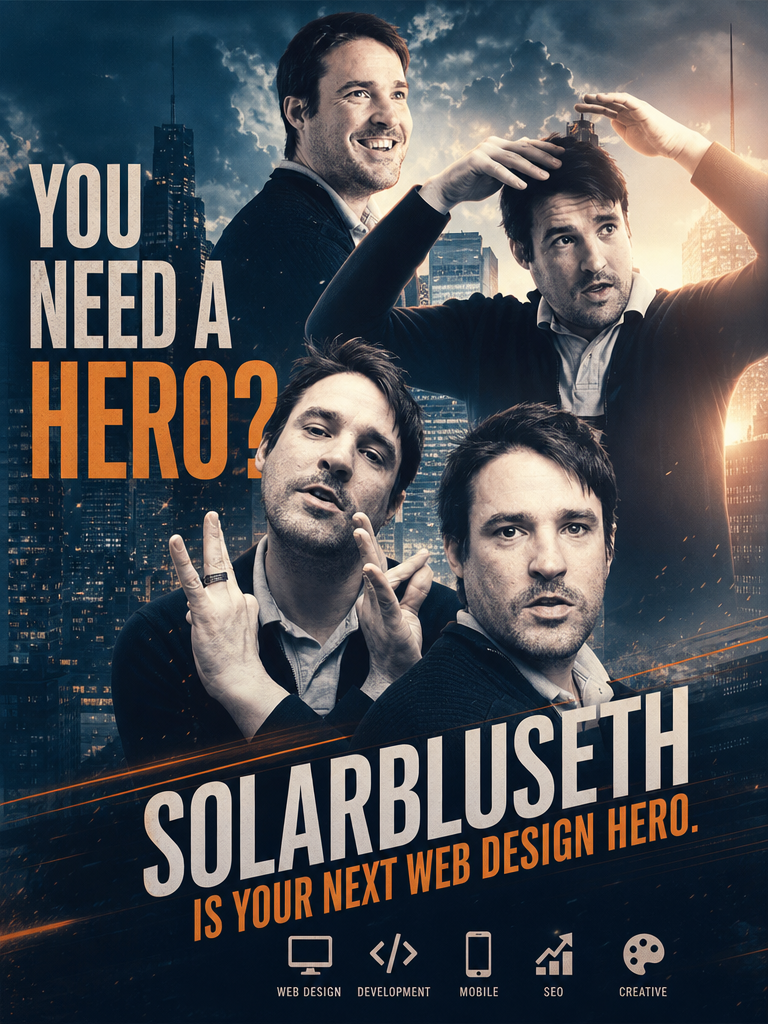
The Campaign — "You Need a Hero"

AI-generated campaign imagery from ElevenLabs — part of the "You Need a Hero" series
The visual campaign came together fast. I'd been generating AI images in ElevenLabs using myself as a reference — and what came back genuinely surprised me. The glasses. The beard. The expression. It looked like me. Living. Thriving. Not performing wellness — actually being it.
Four images. Yellow hoodie. Campus scenes. A desk with a cat. A figure on a bike. Each one carrying little text fragments baked right into the illustration: Still here. Still me. Still thriving. HIV+ — not just a label, it's part of me, not all of me.

The color language is intentional. Living in yellow. HIV+ in red. Warm. Alive. Not clinical. Not scary. Just real.
HIV Don't Stop and Neither Do I — The Video

The video script came out of everything I've been sitting with. Fifteen years of living with this. The week without meds. The paperwork. The phone calls. The biking down country roads in Illinois just because I can. Because my body lets me. Because the medications work.
I wrote it in one sitting. Six minutes. No fluff.
And then when it came time to add music — I almost went to YouTube Audio Library like I always do. But something made me pause. I've been working on Sonata — my live piano practice album. And I had a new track called Glitterati.
🎹 About Glitterati
A new track from the Sonata project — recorded on the Arturia KeyLab Essential 61 with SampleTank 4. Layered under the HIV campaign video at 27% volume. The contrast between the warm glittery energy of the music and the weight of the story creates something neither could do alone.
A new track from the Sonata project — recorded on the Arturia KeyLab Essential 61 with SampleTank 4. Layered under the HIV campaign video at 27% volume. The contrast between the warm glittery energy of the music and the weight of the story creates something neither could do alone.
My own music. Under my own story. About my own life. At 27% volume it sits perfectly — present but never competing. It gives the viewer emotional permission to feel something without telling them what to feel.
I cried editing it. That's how I knew it was right.
Thank You, Gilead

I want to say this clearly and publicly: Gilead Sciences has been part of keeping me alive for 15 years.
And when I hit that coverage gap — when the insurance disappeared and the clock started ticking — their Advancing Access program is what bridged it. Real help. Real people. Real fast.
If you are living with HIV or AIDS and you are in a coverage gap, uninsured, underinsured, or just don't know how you're going to afford your next prescription — please use this resource right now:
Gilead Advancing Access Program
Support for patients who need help affording their HIV medications — regardless of insurance status. Don't go without your meds because of a coverage gap.
What Pride Means This Year
Pride was born from people who were told they were too sick, too broken, too much. People who showed up anyway. Who marched anyway. Who loved anyway.
This year Pride means filing the paperwork. Making the calls. Getting on the bike even when your body is tired. Posting the truth on LinkedIn even when your hands are shaking. Making the video. Writing the blog post. Doing the whole damn thing in one day because you have something to say and you're still here to say it.
Fifteen years. Still here. Still building. Still creating. Still riding.
"HIV don't stop. And neither do I."
What's Next
The video goes up on YouTube, TikTok, and across all my platforms. The campaign images will roll out across social media through Pride Month. The biking photos are next — a whole series of "stopped on the road to document that I'm still moving" content.
And Sonata keeps growing. Glitterati is just one track. There's a whole album being built — live, in real time, one piano session at a time. Come watch it happen.
If this post reached you — share it. Tag someone who needs it. Post the Gilead link in your bio. Be loud about the things we're supposed to be ashamed of. Because shame doesn't save lives. But showing up does.
— SolarBluSeth | June 12, 2026
🏳️🌈 Resources
HIV medication assistance: gileadadvancingaccess.com/patient
HIV medication assistance: gileadadvancingaccess.com/patient
Ryan White HIV/AIDS Program: hrsa.gov/ryan-white-hiv-aids-program
SolarBluSeth is a web developer, entrepreneur, musician, and content creator based in central Illinois. He runs SolarBlu.net LLC and creates music, streams, and content across YouTube, Twitch, Kick, TikTok, and Instagram. He has been living with HIV/AIDS for 15 years and is an open advocate for destigmatization, access to care, and showing up even when it's hard. Follow everywhere: @solarbluseth
Uncategorized
living with it
Mental Health & Pride Month 2026
Staying Alive Is Harder Than It Seems Sometimes
A Mental Health Day, FMLA, Pride Month, and What It Really Means to Still Be Here
I Put It Out There Today
This morning I posted something on LinkedIn that I’ve been sitting with for a while.
I told people I have AIDS.
I told them I haven’t had my medications in almost a week. That I lost my job, my benefits, and some of my stability all at once. And that today — right now — I’m taking an FMLA day to cut through the red tape and get things back on track.
I didn’t post it for sympathy. I posted it because sometimes the bravest thing you can do is say this is hard out loud — and then show people what you do next.

What a Mental Health Day Actually Looks Like
Pop culture wants you to believe a mental health day means bubble baths and scented candles and journaling in a sunlit room.
For a lot of us, it looks like two hours of filling out Social Security paperwork. It looks like printing documentation and calling your doctor’s office to ask them to contact the manufacturer directly because you can’t wait for insurance to get its act together. It looks like navigating systems that were not designed with sick people in mind.
That’s not glamorous. But it’s real. And doing that work — finishing that work — is an act of self-care just as much as any spa day.
“I love finishing tasks. I love looking back at the things I’ve done. There’s a quiet power in checking something off a list that used to feel impossible.”

Today I checked off a lot.

Pride Month and the Weight of Still Being Here
It’s June. It’s Pride Month. And this year, Pride hits differently for me.
Living with HIV — living with AIDS — in 2026 is not a death sentence the way it once was. The medications work. The science has come so far. And yet, there are still days when staying alive feels like a part-time job. When the bureaucracy of survival — the insurance calls, the paperwork, the benefits gaps, the advocacy you have to do just to access your own healthcare — takes more out of you than the diagnosis itself.
Pride was born from people who were told they were too sick, too broken, too much. People who showed up anyway. Who marched anyway. Who loved anyway.
I’m showing up today. In my own way. At my own desk. With my stack of papers and my cold coffee and my determination to get it done.
That counts.

You Don’t Have to Share Everything — But It Helps Someone When You Do
I know not everyone can or should be as open as I was today. There’s risk in disclosure. There’s stigma that’s still very real. I’ve felt it. I’m not naive about it.
But here’s what I know: when I was first diagnosed, I needed to see people living. Not just surviving — living. Talking about it. Being loud about it. Refusing to be ashamed of something that happened to their body.
If this post is that for even one person, it was worth it.
If you’re reading this and you’re in a coverage gap, a benefits nightmare, or a health crisis that feels like it’s drowning out everything else — I see you. It’s a lot. The red tape is real and it’s exhausting and you shouldn’t have to fight this hard just to stay healthy.
But you can do it. One form at a time.

What’s Next
Today I filed paperwork. I made calls. I got my ducks in a row.
Tomorrow I get back to building — my business, my music, my content, my life.
That’s the thing about hard days. They’re not the end of the story. They’re just the part where you do the work nobody sees, so you can show up for the part everybody does.
Happy Pride. Stay alive. Do the hard thing first.
— SolarBluSeth
SolarBluSeth is a web developer, entrepreneur, content creator, and streamer based in central Illinois. He runs SolarBlu.net LLC and creates across YouTube, Twitch, Kick, and TikTok.
If you or someone you know needs HIV care resources, the Ryan White HIV/AIDS Program can help connect you with local services: hrsa.gov/ryan-white-hiv-aids-program
Uncategorized
They Told Me to Stay in My Lane.
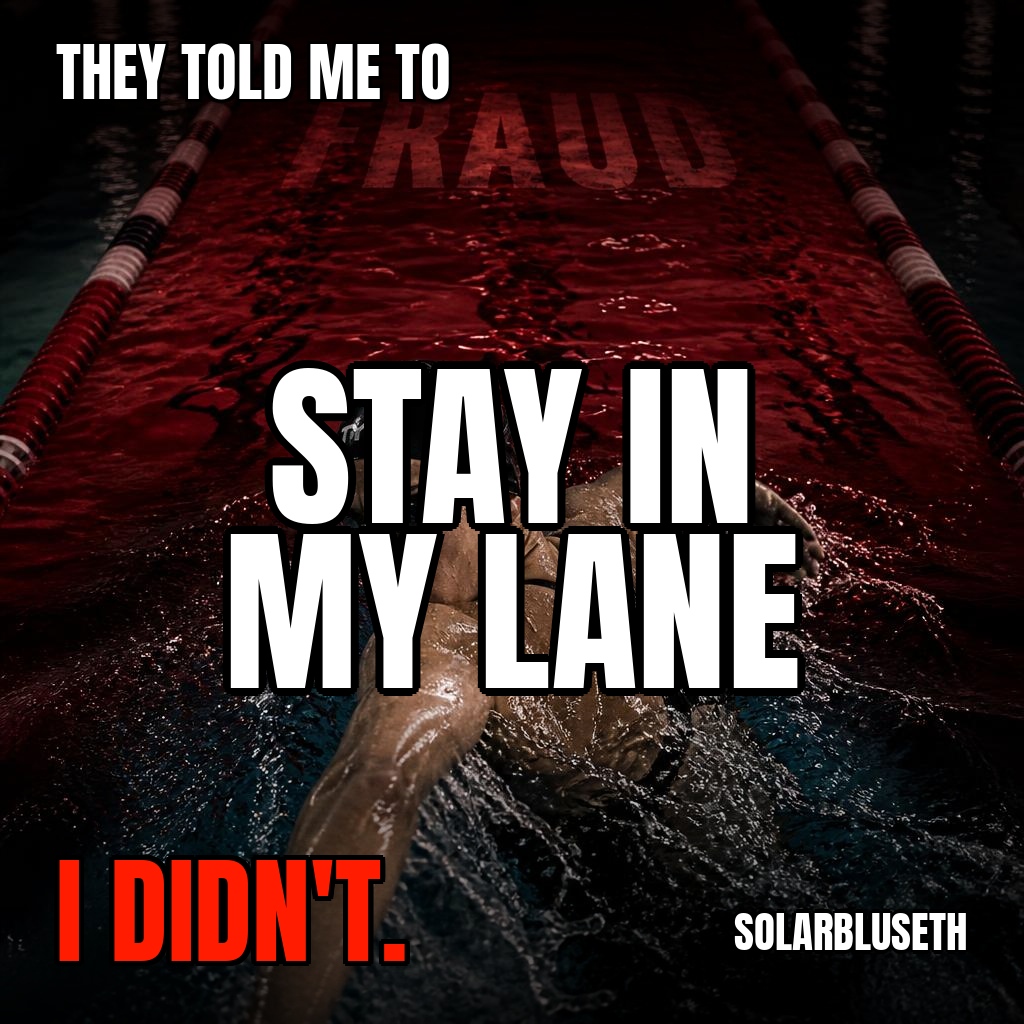
They Told Me to Stay in My Lane. I Didn’t.
ISP Fraud • Whistleblower • Tech
They Told Me to Stay in My Lane.
I Didn’t.
I spent four years as a web developer at a fiber internet company. I found $90 million in missing revenue. I reported it twice to leadership. Both times I was shut down. Then I was fired. This is the full story — the technical methodology, the financial breakdown, the legal framework, and why I’m still talking about it.
Legal Notice — Please Read First
This post is protected speech under the Dodd-Frank Whistleblower Act (SEC Rule 21F-17) and the Illinois Whistleblower Act (740 ILCS 174). No private agreement — including any separation or release agreement — can prevent reporting of federal law violations or discussion of personal witnessed experience. SEC Rule 21F-17 explicitly voids any such provision as a matter of federal law.
No company names, investor names, or individual names are used in this post. All dollar figures are based on my own audit calculations. This post does not constitute legal advice. I am not seeking compensation, damages, or any legal remedy from any party. I want to be heard. That’s it.
Before We Start
People are going to ask what I want out of this. Money? A lawsuit? My job back?
None of the above.
“I want to be heard. That’s it. I found something real, I reported it through the right channels, I was shut down, and I think the people whose money is on the line deserve to know what I know.”
I’m not bitter. I’m not on a revenge tour. I’m a web developer with thirty years of experience who ran a technical audit, found something serious, tried to do the right thing, and got told to mind my own business. Twice. So now I’m doing the next right thing — which is making sure the appropriate authorities know what I know.
The formal disclosures have already been filed. That process is underway. This post exists because the public deserves to understand how this kind of thing happens — and because if you work at a fiber ISP right now, there is a chance this is happening at your company too.
How Fiber Internet Actually Works
To understand what I found, you need to understand one piece of hardware: the ONT.
When a fiber internet company installs service at your home or apartment, a technician installs a small device on your wall called an ONT — Optical Network Terminal. It’s the endpoint of the fiber optic cable running into your building. It converts the light signal from the fiber into data your router can use.
When that ONT is powered on and active, it reports back to the company’s network management system in real time. It’s essentially saying: I’m here. I’m at this address. I’m live. I’m delivering internet service.
Fiber ISPs manage thousands — sometimes hundreds of thousands — of these devices across their networks. To do that at scale, they expose an API (Application Programming Interface) that allows internal systems to query the status of every ONT on the network. Which ones are active. Which ones are offline. What address each one is at.
Now — separately — the company has a billing system. That’s where customer accounts live. Customer name. Email address. Service address. What plan they’re on. What they owe each month.
In a properly functioning company, every active ONT maps to a customer record in the billing system. One device. One customer. One invoice per month. That’s the contract. That’s the revenue.
The Key Principle
An active ONT is proof of service delivery. It is hardware-verified, network-confirmed evidence that a real location is receiving live fiber internet. If that ONT has no corresponding billing record, the company is delivering service for free — and has no idea it’s doing so.
What I Found — The ONT Audit
As a web developer with access to internal systems, I had legitimate access to both the ONT API and the billing system exports. And being the kind of technically curious person I am, I decided to match them up.
Here’s exactly what I did:
1
ONT Data ExportI pulled a complete export of all active ONTs from the API — every device on the network reporting live service delivery, including unit identifier, physical service address, and active/inactive status.
2
Billing System ExportI exported the complete customer database from the billing system — every active customer account including name, email address, and physical service address.
3
Triple Cross-MatchI matched the two datasets against three independent fields: customer name, email address, and physical service address. A match on any one of the three fields counted as a valid billing record. I was being generous — I wanted to eliminate false positives, not create them.
4
Triple VerificationAny ONT that returned no match across all three fields was flagged. I then went through the flagged results manually — triple checking for data entry inconsistencies, address formatting differences, edge cases, and anything else that might create a false mismatch. I wanted to be absolutely certain before drawing any conclusions.
5
Rolling Revenue CalculationFor each confirmed unmatched ONT — each device proven to be delivering live service with no billing record — I calculated the revenue loss on a rolling monthly basis going back to the estimated service start date.
The result was unambiguous. Over 3,000 active ONTs had zero corresponding customer records in the billing system.
Three thousand physical devices. Delivering live fiber internet. To real addresses. Right now. With no invoice. No customer account. No revenue.
“This wasn’t a spreadsheet anomaly or an accounting estimate. These were hardware-verified, network-confirmed service deliveries with no billing record. The proof was in the devices themselves.”
The rolling revenue calculation was staggering. I built it month by month, going back through the estimated service period for each account. The number climbed fast. Really fast. Because that’s what happens when you multiply three thousand accounts by seventy dollars a month by dozens of months — the math compounds in a way that doesn’t feel real until you’re staring at it.
The Financial Breakdown
Let me show you exactly how $90 million disappears. It’s simpler than you’d think.
| Description | Estimated Amount |
|---|---|
| Confirmed unbilled active ONTs (hardware verified) | ~3,000+ accounts |
| Average monthly service fee per account | $69.96 / month |
| Conservative unbilled period | 36 months (3 years) |
| Unrecoverable revenue per account (3 years) | ~$2,519 |
| Total unrecoverable revenue — 3-year base | ~$7,555,680 |
| Additional 2 years since first internal report (2 yrs × 3,000 × $69.96) | +$5,037,120 |
| Ongoing infrastructure / support costs for 3,000+ unpaid accounts | Unquantified additional loss |
| Total estimated unrecoverable loss (conservative) | ~$12,592,800+ |
| Ongoing monthly exposure (still unresolved as of this post) | ~$209,880 / month |
That last line is the one that keeps me up at night. Every single month that passes without this being addressed, another $209,880 evaporates. Permanently. Because of the most important financial reality in this entire story:
Why the Money Is Gone Forever
You cannot retroactively bill a customer for service they received but were never invoiced for. They have no contract. They received no bills. They made no agreement to pay retroactively.
Under basic contract law and consumer protection law — you simply cannot collect it. A court would throw that invoice out before you finished explaining the situation.
So every dollar represented in that table — roughly $90 million and counting — is gone. It was never real revenue. It can never become real revenue. The gap between what was represented and what was real is permanent and unrecoverable.
What Happened When I Reported It
I did what any responsible employee would do. I brought it up.
~2023 — Report #1
Reported to VP
I brought the findings to a vice president. Explained what I found. Walked through the numbers. The response I received: “Stay in your own swim lane.” No investigation. No follow-up. No acknowledgment that the issue was real. Just — mind your own business.
~2023 — Report #2
Reported to Supervisor
I raised the same issue with my direct supervisor. Same result. No corrective action. No escalation. The billing gap remained open and the revenue kept not being collected.
~2023–2024 — Report #3
Reported to Interim Billing Manager
I brought it to the person literally responsible for billing operations — the interim billing manager. No response. The individual most accountable for billing accuracy took no action whatsoever.
~Early 2025 — Independent Discovery
Colleague Finds the Same Issue
A colleague independently discovered approximately 50 unbilled accounts and raised the issue internally. A corroborating witness observed the matter being dismissed without investigation — for the third time. Same result. Swept under the rug.
May 2026 — Present
Still Unresolved
To my knowledge, no formal audit has ever been commissioned. The affected customers remain unbilled. The revenue loss continues to compound at approximately $209,880 per month.
Why This Matters Beyond One Company
Here’s the part that keeps me talking about this even after everything.
This isn’t a sophisticated fraud. Nobody sat in a boardroom and hatched a scheme. What happened here is something much more mundane and much more dangerous: two systems that didn’t talk to each other, and a leadership team that didn’t want to hear about it.
The provisioning side of the business spins up service. A technician installs an ONT, activates it on the network, and moves on. The billing side of the business creates customer accounts. Somewhere in that handoff — for thousands of accounts — the billing record never got created. The ONT went live. The billing account didn’t.
Nobody noticed. Or nobody wanted to notice. And when someone did notice and raised it — repeatedly — the institutional response was silence.
For ISP Operators Reading This
Pull your active ONT list. Pull your billing records. Cross-reference them by physical address. If you find gaps — and some of you will — you now have the methodology to quantify them. The longer you wait to find this, the bigger the number gets. And the bigger the number gets, the worse it looks when it’s eventually found by someone who isn’t on your payroll.
The Investor and Lender Dimension
This story would be significant on its own as a billing operations failure. But there’s a layer on top of it that moves this into entirely different legal territory.
This company received a significant preferred equity investment from a major institutional investor — based in part on represented customer counts and revenue figures. It subsequently secured a $235 million debt facility from a major international bank — also based on represented operational scale.
If the approximately 3,000+ unverified, unbilled accounts were included in any customer count or revenue representation made to either of those parties during due diligence or ongoing reporting — then both transactions were consummated on the basis of materially inaccurate financial information.
Under ASC 606 — the GAAP standard for revenue recognition — revenue can only be recognized when performance obligations are satisfied and collectibility is probable. Customers who have never been invoiced fail that test. Their inclusion in any revenue or customer count representation constitutes a material misstatement of financial condition.
That is not a billing operations problem anymore. That is a securities and investor fraud problem.
The Legal Framework
I want to be clear about something: I am not a lawyer. None of this is legal advice. But I do know how to read case law, and the precedents in this area are not ambiguous.
| Case / Authority | Why It Matters Here |
|---|---|
| SEC v. Lucent Technologies2004 — $25M Settlement | Lucent settled SEC charges for counting revenue that had not been earned. The parallel to counting customers who were never billed is direct and uncomfortable. |
| United States v. Ebbers (WorldCom)403 F.3d 173 (2d Cir. 2005) | CEO convicted of securities fraud for inflating reported revenue figures. Established that misrepresenting revenue to investors is criminal fraud regardless of the mechanism used. |
| Tellabs v. Makor Issues & Rights551 U.S. 308 (2007) | The Supreme Court standard for securities fraud claims under PSLRA — the exact framework investors would use to pursue civil claims against company executives. |
| In re BarrierFree (FCC-20-123)FCC Enforcement 2020 | FCC proposed $163,912 fine against an ISP that “reported having vastly more broadband subscribers than there were housing units” in service areas. Sound familiar? |
| FTC v. Frontier CommunicationsFTC Enforcement 2021/2022 | FTC and multiple state AGs sued Frontier for ISP billing misrepresentation and unfair billing practices — establishing the FTC’s active jurisdiction over exactly this type of conduct. |
| Illinois Whistleblower Act740 ILCS 174 | Protects former employees who report violations of law in good faith. Cannot be waived by private agreement. This post and the accompanying video are fully protected. |
| Dodd-Frank Act, SEC Rule 21F15 U.S.C. § 78u-6 | Original information sources are entitled to 10–30% of SEC sanctions exceeding $1 million. Rule 21F-17 explicitly voids any agreement that impedes reporting to the SEC. |
What I’ve Done About It
I have formally submitted this disclosure to the appropriate federal and state regulatory authorities. That process is underway. I am not going to detail the specific filings publicly at this time, but the relevant agencies are aware of what I’ve described in this post.
I have also submitted a formal whistleblower disclosure letter — addressed to the company’s HR department, with simultaneous copies transmitted to the SEC, FTC, FCC Enforcement Bureau, Illinois Attorney General, Illinois Commerce Commission, Champaign County State’s Attorney’s Office, the company’s Board of Directors, and both financial parties whose capital is at risk.
That letter includes a formal litigation hold demand. Every person who received it is now legally obligated to preserve relevant records. Any destruction of records following receipt of that notice constitutes obstruction of justice.
What I Want
People will ask what I want out of this. The answer is simple. I want to be heard. Not compensated. Not vindicated. Not celebrated. Just heard. By someone with the authority and the obligation to do something about it.
I reported this internally — twice — and was told to mind my own business. A colleague reported it independently and was ignored. The issue remains unresolved. The revenue gap keeps growing. The investors and lenders whose capital is at risk have a right to know what I know.
So I’m making sure they know.
This is Part 1 of the Whistleblower Series on SolarBluSeth.com. When this story becomes fully public — and it will — I’ll be here to walk through every detail. Subscribe to this blog, follow me on YouTube, and drop a comment below if you’ve seen something similar at your own company.
Because I suspect this is more common than anyone wants to admit.
Watch the Full Video
“They Told Me to Stay in My Lane. I Didn’t.” — the full story with technical breakdown, financial analysis, and the moment I decided to stop staying quiet.